Neither Too Close Nor Too Far: The Delicate Calculus of Desire and Distinction
There is a particular cruelty in the commonplace. When something — or someone — becomes effortlessly available to all, it surrenders the quality that made it worth seeking in the first place. And yet the opposite condition, that of the utterly unreachable, produces not desire but resignation. The most sophisticated pleasures in life occupy neither extreme. They exist in a carefully maintained interval between the two: close enough to inspire pursuit, distant enough to sustain it.
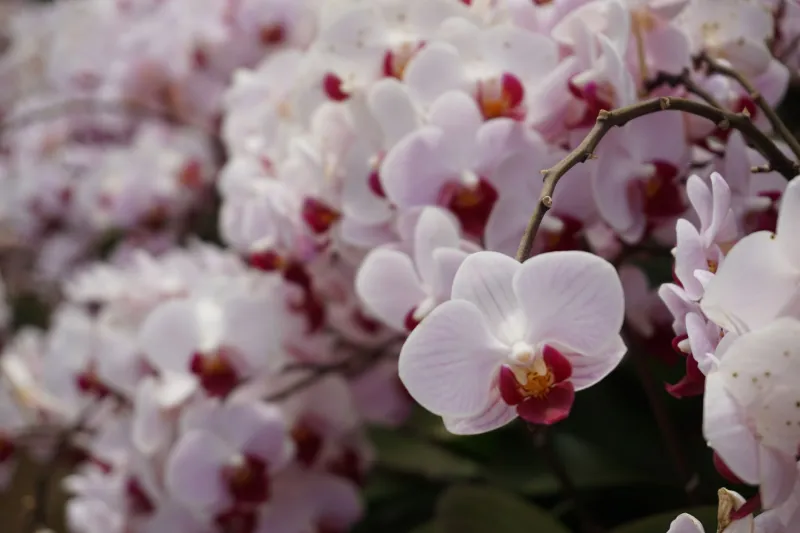
This is, in botanical terms, precisely the paradox of the orchid.
The flower has long occupied a singular position in the Western imagination — simultaneously one of the most widely cultivated blooms on earth and one of the most persistently associated with rarity, fragility, and refinement. Walk through the glasshouses at Kew Gardens and you will encounter hundreds of species, each extraordinary in its own right. Yet the orchid has never lost its reputation for preciousness. This is not an accident of perception. It is the result of a quality that horticulturalists understand implicitly: the orchid demands conditions. It does not thrive everywhere. It cannot be coaxed into bloom by casual attention or indifferent care. Its abundance, where it exists, is the product of expertise, patience, and an environment precisely suited to its needs.
In this, the orchid offers a rather instructive metaphor for the world of refined companionship in Belgravia.
The Myth of Scarcity as a Substitute for Quality
It is tempting, in certain quarters, to conflate unavailability with value. Some operate under the assumption that making oneself difficult to reach — through elaborate gatekeeping, extended delays, or performative aloofness — creates the impression of worth. This is a misunderstanding, and a costly one.
True discernment is not the same as inaccessibility. A companion of genuine distinction is not hard to engage because she is indifferent to engagement. She is selective because she understands, with considerable clarity, which encounters will prove meaningful and which will not. The distinction matters enormously. One is a posture; the other is a principle.
The most accomplished companions in London's premier circles have long understood that their desirability rests not on artificial scarcity but on authentic selectivity. They are available — thoughtfully, purposefully, on terms that reflect mutual respect — to those whose company they find genuinely rewarding. This is not a transaction in availability; it is a considered exercise in compatibility.
Cultivated Abundance: The Orchid's True Lesson
Return for a moment to the glasshouse. The orchid grower who has mastered her craft does not produce one bloom and guard it jealously behind glass. She creates the conditions under which many blooms may flourish — each one exceptional, each one the product of deliberate cultivation. The abundance she achieves does not diminish the value of any individual flower. If anything, it confirms her expertise. The flowers are numerous because the conditions are right, not because standards have been lowered.
This is the model that distinguishes a genuinely premium companionship service from its lesser counterparts. The question is never simply how many companions are available, but whether the conditions — of mutual respect, shared discretion, considered compatibility — have been cultivated with sufficient care to allow genuine connection to flourish.
At Belgravia Orchids, this philosophy informs every aspect of how introductions are approached. The goal is not to manufacture scarcity as a marketing device, nor to flood the field with quantity at the expense of quality. It is to ensure that each encounter takes place within conditions that allow it to be, in the truest sense, exceptional.
The Gentleman's Perspective: What Availability Actually Signals
For the discerning gentleman approaching this world with a practised eye, the signals of genuine quality are worth understanding. A companion whose diary is perpetually, suspiciously empty may inspire not confidence but caution. Equally, one whose schedule is so crowded as to preclude any meaningful attention to the present engagement is scarcely more reassuring.
The companion of true distinction occupies a different position. Her time is her own, allocated with intention. When she is present, she is wholly present — not distracted by the weight of an overbooked calendar, nor so unoccupied as to suggest that her company goes unremarked by others. She is, in short, sought after without being overwhelmed; engaged without being exhausted.
This is the quality that experienced clients in Belgravia and its surrounds have learnt to recognise and to value. It is not a quality that can be fabricated. It emerges, naturally and inevitably, from a companion who has cultivated a life of genuine richness — one who brings to each engagement the full texture of her intelligence, her interests, and her considered presence.
Accessibility on Considered Terms
There is a further dimension to this balance that deserves attention: the terms upon which access is extended. Luxury, in its most refined expression, is never simply about price. It is about the conditions that surround an experience — the ease of approach, the quality of communication, the confidence that one's enquiry will be treated with the same discretion and respect that one extends in making it.
A service that is technically available but practically forbidding — surrounded by unnecessary friction, opaque processes, or an atmosphere of suspicion — fails the test of genuine luxury regardless of its other qualities. Conversely, a service that is accessible in every sense — clear, warm, responsive, and utterly discreet — signals, by those very qualities, that it understands what its clientele actually requires.
The most coveted addresses in Belgravia operate on precisely this principle. One does not queue. One does not navigate labyrinthine processes. One is received, with quiet efficiency, as a guest of consequence. The experience of approach mirrors the experience of arrival.
The Paradox Resolved
Perhaps the orchid's paradox is not, in the end, a paradox at all. Rarity and accessibility are not opposites straining against one another; they are complementary qualities that, held in the correct proportion, produce something genuinely extraordinary. The orchid is rare because it demands the right conditions — and it is accessible because those conditions, when properly understood and faithfully maintained, can be reliably created.
So it is with the finest companionship that Belgravia has to offer. The companions of true distinction are neither impossibly remote nor carelessly abundant. They are present, purposefully, for those who approach with the right spirit — and in that precise availability, they remain, always, genuinely rare.
This is not a paradox to be solved. It is a balance to be honoured.


