Speaking with Grace: The Conversational Virtues That Define London's Most Accomplished Companions
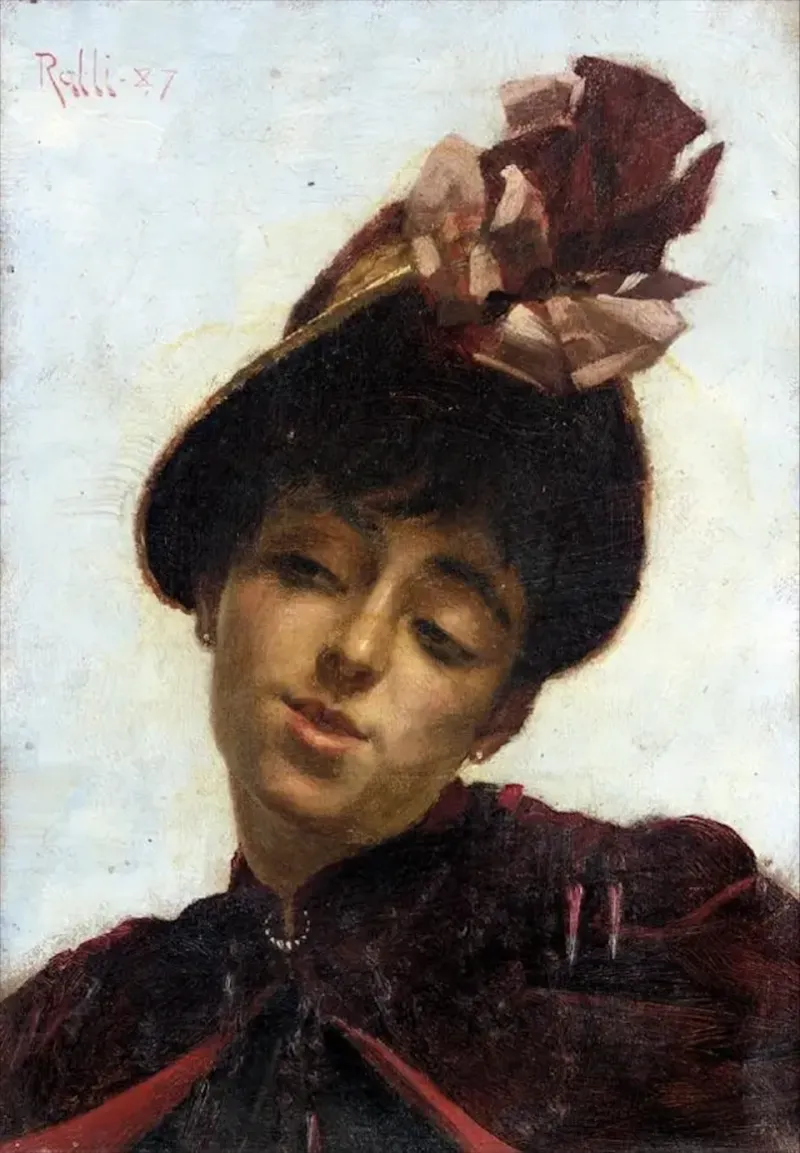
Photo: Théodore Ralli, Public domain, via Wikimedia Commons
There is a particular quality one notices almost immediately upon entering the drawing rooms of Belgravia, the members' clubs of St James's, or the private dining rooms of Mayfair. It is not solely the cut of a jacket or the provenance of the wine being served. It is, rather, the quality of conversation — its texture, its rhythm, and the unmistakable sense that every participant has arrived not merely to be seen, but to engage meaningfully with the world around them.
For a companion who moves within these circles, the ability to converse with genuine sophistication is not a supplementary skill. It is, in every meaningful sense, the foundation upon which all other qualities rest.
The Distinction Between Talking and Conversing
One of the most common misconceptions among those new to high-society environments is that eloquence resides primarily in one's capacity to speak. In truth, the most accomplished conversationalists in London's elite circles are, above all else, exceptional listeners. They possess what might be described as active curiosity — a genuine interest in the perspectives, experiences, and expertise of those they are speaking with.
A companion who can draw out a guest's enthusiasm for, say, the recent Soane Museum exhibition, a particular school of economic thought, or the nuances of a recent Ashes series, and who can respond with informed engagement rather than rehearsed pleasantries, creates something far more memorable than one who simply delivers polished monologues. The finest conversations feel collaborative; they leave both parties feeling intellectually nourished.
This distinction — between performing conversation and genuinely participating in it — is one that discerning clientele recognise almost instinctively.
Navigating Sensitive Terrain with Diplomatic Intelligence
London's most prestigious social gatherings are rarely homogeneous affairs. Around a single dinner table, one might find a City financier, a senior diplomat, a celebrated author, and a retired cabinet minister — each arriving with distinct political sympathies, personal histories, and sensitivities. The ability to move through such company without causing offence, while still contributing something of intellectual substance, demands a particular form of social intelligence.
The art here lies in what diplomatic circles sometimes call calibrated neutrality — the capacity to acknowledge competing viewpoints with apparent impartiality, to pose thoughtful questions rather than declarative statements, and to redirect conversations that begin to sharpen into conflict. This is not dishonesty or evasion. It is, rather, the graceful exercise of social responsibility.
A companion who understands, for instance, the broad contours of Brexit's ongoing legacy, the cultural sensitivities surrounding the Commonwealth, or the delicate dynamics of old money versus new wealth in contemporary British society, is far better equipped to navigate an evening's conversation without inadvertently creating friction. Knowledge, in this context, functions as a kind of social armour.
Cultural Fluency as Conversational Currency
In 2024, the most sought-after companions in London are those who move fluidly between cultural registers. They can speak knowledgeably about the current season at the Royal Opera House and, in the same evening, offer a considered opinion on a Booker Prize shortlist or a recent retrospective at the Tate Modern. They are as comfortable discussing the subtleties of Burgundy vintages as they are engaging with a guest's passion for contemporary architecture or classical antiquities.
This breadth of cultural awareness is not the product of superficial research. It emerges from genuine intellectual engagement with the world — from reading widely, attending exhibitions, travelling thoughtfully, and remaining curious about disciplines beyond one's immediate comfort. The companions who cultivate this kind of cultural fluency find that it opens doors in conversation that remain firmly closed to those relying solely on charm.
For clients whose professional lives involve international travel, complex negotiations, or appearances at major cultural institutions, a companion who can hold her own in discussions ranging from Viennese architecture to the contemporary art market in Seoul is genuinely invaluable.
The Quiet Power of Wit and Restraint
British social culture has long placed considerable value on wit — but wit of a very particular character. The heavy-handed joke, the anecdote told at another's expense, the forced levity that signals discomfort rather than ease: these are the conversational missteps that mark an outsider. The wit that is prized in Belgravia and its neighbouring postcodes is dry, self-aware, and deployed with considerable economy.
A single well-timed observation, delivered quietly and without fanfare, will often do more to establish social credibility than an hour of animated storytelling. The most accomplished companions understand that restraint — knowing when to withhold a comment, when to allow silence to breathe, when to deflect attention from oneself rather than attract it — is itself a form of conversational mastery.
This quality is, admittedly, difficult to teach. It tends to develop through sustained exposure to high-quality social environments, through careful observation, and through the kind of reflective self-awareness that distinguishes the genuinely accomplished from those who merely approximate sophistication.
Presence as the Foundation of All Else
Underpinning every conversational skill described above is something more fundamental: the quality of presence. A companion who is genuinely present — who is not mentally elsewhere, not performing for an imagined audience, not distracted by the room's social hierarchies — communicates something that no amount of rehearsed technique can replicate. She communicates that the person she is speaking with matters.
In London's elite social world, where status and accomplishment are rarely in short supply, this quality of attentive presence is, paradoxically, one of the rarest and most valued gifts a companion can offer. It transforms an evening from a social obligation into something genuinely pleasurable — a reminder that conversation, at its finest, remains one of life's most enduring and civilised pleasures.