Threshold Diplomacy: The First and Last Five Minutes of a Discreet Evening

Photo by Photo by Chuko Cribb on Unsplash on Unsplash
The Threshold Is the Test
In Belgravia, an evening rarely begins at the table. It begins at the kerb, under a portico, or in the hush of a residents' entrance where the city's noise falls away by degrees. The first five minutes establish the terms of the encounter: whether the gentleman has planned, whether he understands discretion, whether he treats punctuality as a courtesy rather than a performance. The last five minutes do the same in reverse. They decide what the evening leaves behind—warmth, ease, a sense of care—or a faint residue of haste.
The five-minute rule is not a stopwatch instruction. It is a discipline of attention. It asks a gentleman to think about the threshold as carefully as he thinks about the table, the wine, or the conversation. In a neighbourhood where privacy is a form of good manners, the threshold is where privacy is either honoured or quietly undermined.
The Kerbside Pause
A car that arrives too early can be as conspicuous as one that arrives late. The gentleman who understands the choreography does not idle outside a Belgravia address with the engine running and the hazards blinking. He arrives, confirms the timing, and allows the last few minutes to pass elsewhere—perhaps in a nearby street, perhaps in the quiet of a courtyard, perhaps simply by waiting until the agreed hour before sending the briefest message that he is at hand.
The kerbside pause is also a moment of composure. It is the interval in which a gentleman checks that he has not brought the day's clutter with him: the unanswered email, the irritation of traffic, the distracted air of a man still half in a meeting. The first five minutes are not the place to rehearse the day's frustrations. They are the place to arrive.
The Doorman's Ledger
Doormen and porters are the unsung archivists of Belgravia. They notice patterns. They remember who is courteous, who is impatient, who treats the entrance hall as a stage and who treats it as a shared space. A gentleman does not need to befriend every porter in SW1, but he should understand that a quiet word, a steady manner, and an absence of fuss are worth more than any display of status.
Protocol here is simple. Give a name only if a name has been agreed. Confirm the destination without announcing it to the room. Do not linger in the lobby as though waiting for an audience. The doorman is not a gatekeeper to be managed; he is a professional whose discretion is part of the evening's architecture. The gentleman who recognises this makes the whole address calmer for everyone in it.
Inside the First Five
Once inside, the first five minutes are a study in restraint. A coat taken without ceremony. A glance that acknowledges the room without scanning it. A greeting that is warm but not theatrical. The temptation, particularly in a grander setting, is to fill the silence with commentary—on the traffic, the weather, the wine list—but the more refined instinct is to let the room settle.
This is where small courtesies do their quiet work. Asking whether the temperature suits. Noting a chair that might be better placed. Offering a drink without making a performance of the offering. The gentleman who arrives well does not dominate the first five minutes; he makes them easy. That ease is the foundation on which the rest of the evening can be built.
The Departure Signal
The last five minutes begin long before the coats are collected. They begin when the conversation reaches its natural close and neither party pretends otherwise. A gentleman watches for that moment. He does not stretch an evening beyond its useful life, nor does he end it so abruptly that the evening feels dismissed.
The signal is rarely verbal. It might be the settling of a glass, the smallest shift in posture, the glance towards the door that is not quite a glance. The gentleman who has been attentive will already know. The gentleman who has not will mistake the signal for an invitation to order another drink.
The Quiet Exit
The exit is where discretion is most often lost. A flamboyant departure—the loud farewell, the lingering at the threshold, the car called with unnecessary drama—can undo hours of careful conduct. The refined exit is almost invisible. Coats are collected without commentary. Thanks are offered quietly to the staff who made the evening possible. The door closes without a speech.
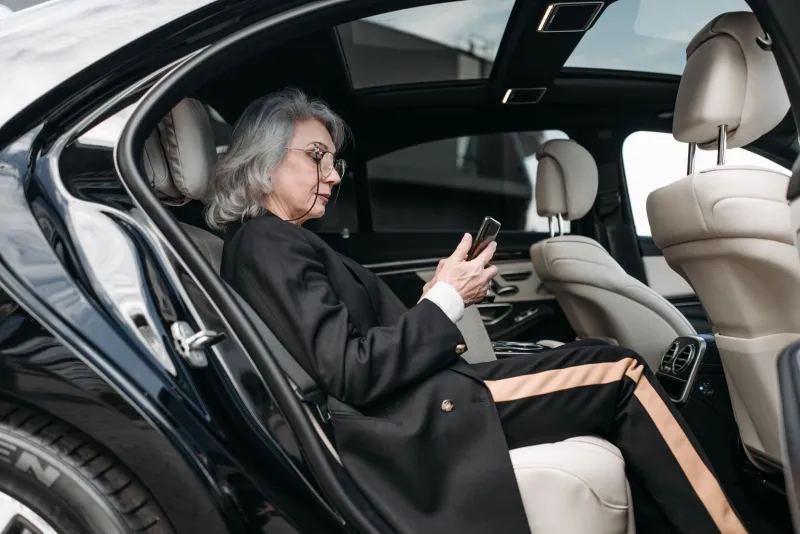
If a car is waiting, the gentleman does not keep it waiting at the kerb while the last conversation continues. He has timed the departure so that the car arrives when it is needed, not when it is noticed. If a taxi is to be found, he does not turn the search into a public event. The street is not a stage. The last five minutes are not a curtain call.
After the Door Closes
What remains after the door closes is the true measure of the evening. A thoughtful message the following day—brief, warm, and free of presumption—can extend the courtesy of the threshold into the quieter hours that follow. But even that message should respect the same principle: discretion is not a performance of secrecy; it is a form of respect.
The first and last five minutes are brief, but they are not small. They are the hinges on which an evening turns. A gentleman who attends to them announces, without saying so, that he understands the difference between an appointment and an occasion. In Belgravia, that difference is everything.