The Unwritten Map: Social Codes, Mutual Trust, and the Protocols That Govern London's Most Exclusive Connections

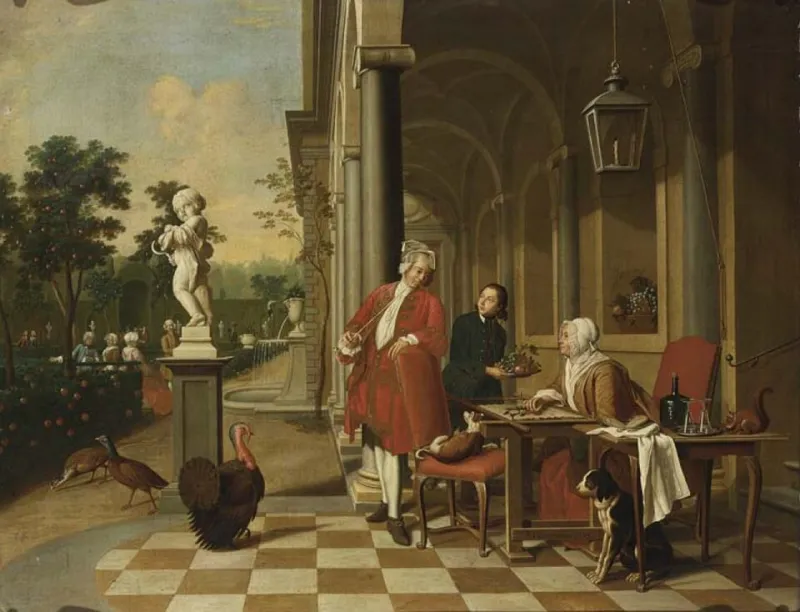
Photo: Daria, CC BY 3.0, via Wikimedia Commons
London has always maintained two parallel social worlds. The first is visible — the charity galas, the members' clubs, the carefully managed public profiles. The second operates in an entirely different register: quieter, more carefully bounded, and governed by conventions that are never written down because, amongst those who need to know them, they require no documentation.
For high-net-worth individuals who engage premium companionship within the city's most prestigious postcodes, this second world is not an aberration. It is simply the natural extension of a life already accustomed to operating with discretion, nuance, and a finely calibrated understanding of context.
Trust as Currency
In Belgravia — and in the broader SW1 and SW3 corridor that forms the backbone of London's most exclusive residential and social geography — trust is not granted on the basis of reputation alone. It is accrued through demonstrated behaviour, sustained over time, and it is extraordinarily difficult to rebuild once fractured.
This principle governs the relationship between premium companions and their clientele as surely as it governs any other form of high-value professional engagement in the city. A solicitor who handles sensitive matters for a prominent family, a private banker who manages generational wealth, a discreet companion who accompanies a client to a private dinner in Chelsea — each operates within the same fundamental economy of earned confidence.
The language of this economy is not spoken aloud. It is communicated through punctuality, through the careful management of information, through the consistent alignment of one's behaviour with one's stated values. In these circles, trustworthiness is assessed not through declarations but through patterns.
Coded Communication and the Art of Understanding
Those unfamiliar with the social architecture of London's upper echelons are sometimes puzzled by what appears to be an elaborate indirectness in how arrangements are discussed and preferences expressed. This indirectness is not evasion. It is a form of sophistication — a means of communicating precisely while preserving the deniability and privacy that both parties value.
A client who mentions, in passing, that he finds a particular type of engagement 'rather more comfortable' than another is not being vague. He is being entirely clear, in a register that a perceptive companion will understand immediately and a less attuned one will miss entirely. Similarly, a companion who indicates that she 'tends to find the early part of the evening more suitable' for certain arrangements is communicating a boundary with perfect clarity, without the awkwardness of explicit negotiation.
This coded fluency is one of the most significant markers of genuine sophistication in premium companionship. It requires not only intelligence but a deep familiarity with the social grammar of the world in which one operates.
Boundaries as the Foundation of Longevity
It is a paradox that those who navigate London's most exclusive social arrangements most successfully are, without exception, those who are clearest about their own limits. The companion who maintains firm, consistent boundaries does not restrict the relationship — she defines it in a manner that allows it to flourish over time.
This is well understood by clients who have operated at senior levels in professional or public life. Such individuals are accustomed to environments in which clarity of role and expectation is the precondition for effective collaboration. They do not experience clearly stated limits as rejection; they experience them as a form of professional integrity that mirrors their own.
The most enduring client-companion relationships in Belgravia's premium circles are characterised by precisely this quality of mutual clarity. Each party understands what is offered, what is not, and why. Within those parameters, the relationship can develop genuine warmth, intellectual depth, and a degree of personal understanding that is, in its own way, quite remarkable.
The Geography of Discretion
London's social architecture is, in part, literally architectural. The private members' clubs of St James's, the quiet hotel bars of Knightsbridge, the discreet private dining rooms available through certain specialist concierge services — these spaces exist, in no small part, because there has always been a significant demand for venues in which the city's most prominent individuals can socialise without the discomfort of public visibility.
Belgravia, in particular, offers a residential character that the more commercial neighbourhoods of Mayfair or the City cannot replicate. Its garden squares and white stucco terraces create an environment of contained privacy — a neighbourhood that feels, even in the heart of one of the world's most populous cities, almost village-like in its discretion.
For companions and clients alike, understanding the geography of this discretion — knowing which venues offer genuine privacy and which merely the appearance of it, which hours and entrances minimise the likelihood of unwanted encounters — is a practical literacy that the most experienced practitioners develop almost unconsciously.
The Etiquette of the Ongoing Relationship
While much attention is given, quite reasonably, to the protocols governing initial engagements, it is in the management of ongoing relationships that the most nuanced social intelligence is required.
A client who has engaged the same companion on several occasions over the course of a year occupies a different relational position than one making an initial enquiry. The nature of the connection has evolved; certain conversational territories have been mapped; a degree of genuine familiarity has developed. Navigating this evolution with grace — acknowledging the warmth that has accumulated without allowing it to erode the professional clarity that makes the relationship sustainable — is a skill that the finest companions in London's premium market handle with considerable artistry.
It requires, above all, a kind of emotional honesty: the capacity to be genuinely warm without being misleading, genuinely interested without creating false expectations, genuinely caring without overstepping the boundaries that protect both parties.
An Architecture Worth Respecting
The unwritten rules that govern elite companionship in London are not arbitrary affectations. They are the accumulated wisdom of a social world that has learned, through long experience, how to accommodate human complexity with grace and without scandal.
For those who take the trouble to understand them — and to operate within them with genuine integrity — they represent not a constraint but a liberation: the freedom to engage authentically, to be known and appreciated as an individual, and to enjoy the particular pleasure of a connection conducted with intelligence, mutual respect, and impeccable discretion.