The Quiet Art of Knowing: How Exceptional Companions Anticipate Without Being Asked
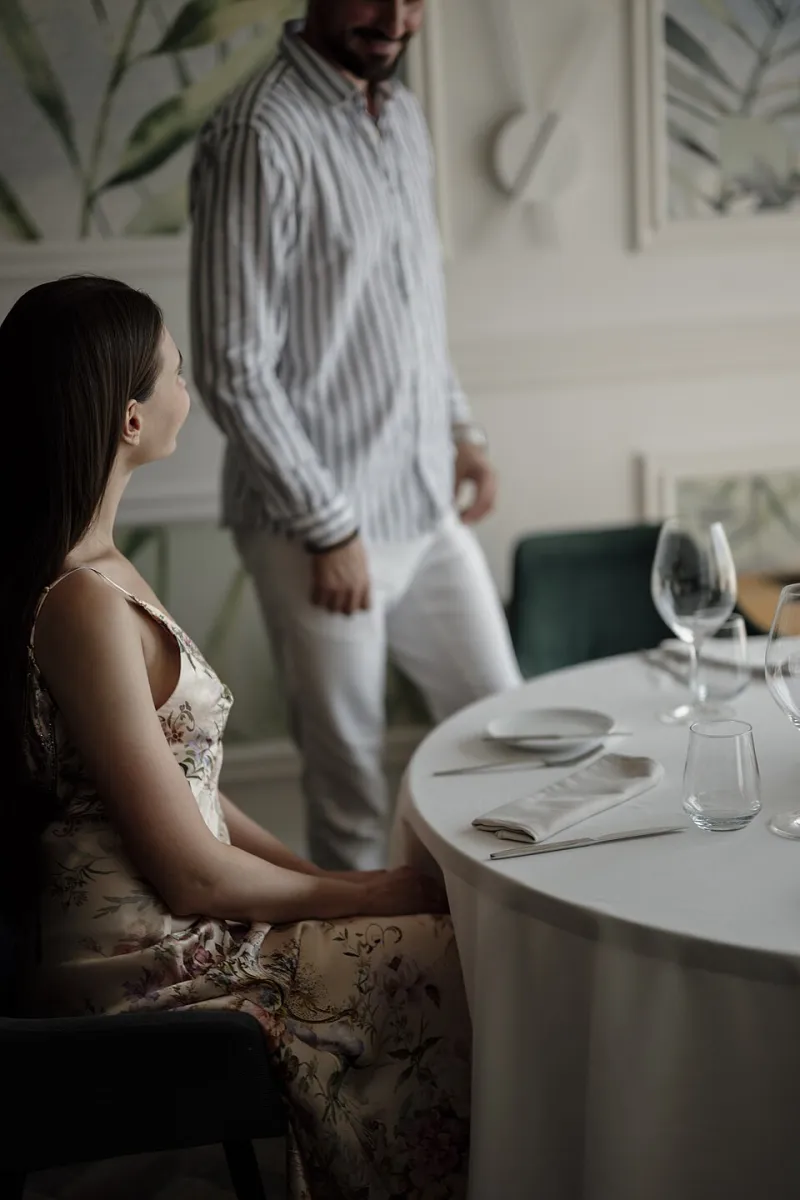
Photo: Shixart1985, CC BY 2.0, via Wikimedia Commons
There is a particular quality that separates a pleasant evening from one that remains in the memory long after the occasion has passed. It is not, as one might assume, the grandeur of the setting or the calibre of the conversation alone. It is something subtler — a feeling that one has been genuinely understood, that one's preferences have been intuited rather than interrogated, and that the experience has been shaped around one's nature rather than assembled from a generic template.
This quality — anticipatory attentiveness — is among the most refined skills a companion can possess. At Belgravia Orchids, it is also among the most valued.
Observation as a Form of Respect
The most accomplished companions do not arrive at attentiveness through guesswork. They arrive through careful, unhurried observation — a discipline that begins well before any formal engagement and continues quietly throughout every interaction.
Consider the small but telling details that reveal a great deal about a person: the pace at which they speak when at ease versus when distracted; the way they orient themselves in a restaurant — whether they prefer to face the room or sit with their back to it; whether they reach for wine or water first; whether silence between exchanges appears to unsettle them or to offer them relief. Each of these signals, taken individually, may seem inconsequential. Taken together, they compose a portrait of preference that no questionnaire could adequately capture.
A companion who notices these things — and adjusts accordingly, without announcement or fanfare — is demonstrating a form of respect that goes far deeper than surface courtesy. She is communicating, without words, that her attention belongs to the person before her rather than to the performance of a role.
The Distinction Between Intuition and Assumption
It is worth drawing a careful line between genuine attentiveness and the more hazardous tendency to assume. The two are often confused, but they operate in fundamentally different ways.
Assumption proceeds from a fixed idea of what a person must want, based on category or stereotype. Intuition, by contrast, proceeds from observation of the specific individual — and crucially, it remains open to revision. A companion who practises true anticipatory care will notice when her initial reading requires adjustment. She will adapt without drawing attention to the adjustment itself.
This is particularly relevant in matters of physical proximity and personal space. Comfort in this regard varies enormously between individuals, and it is rarely communicated directly. Some gentlemen are at ease with a close, warm physical presence from early in the evening; others require time to settle into the company of someone new before such ease feels natural. Neither preference is more correct than the other, and neither should require a formal declaration. The perceptive companion reads the signals — a slight lean towards or away, the degree of eye contact sustained, the manner in which a hand is offered or received — and calibrates her own manner accordingly.
Conversation, Preference, and the Map of a Person's Mind
Beyond physical ease, anticipatory attentiveness extends naturally into the realm of conversation. A gentleman of discernment is unlikely to arrive at a dinner table wishing to be entertained by a monologue, nor to sit through an evening of questions that feel more like an interview than an exchange. What he seeks — whether or not he articulates it — is conversation that feels responsive to him.
This means that the companion who serves him best is one who has developed a genuine range of intellectual and cultural reference, and who deploys that range selectively rather than comprehensively. She will follow the thread of his interests, allowing him to expand or contract them as his mood dictates. If he gravitates towards a particular subject — whether that is political economy, fine art, horse racing, or the architecture of Georgian London — she will meet him there with genuine engagement rather than polite tolerance.
Equally, she will recognise when a gentleman requires relief from conversation rather than stimulation through it. The capacity to be comfortably present without filling silence is, in itself, a sophisticated social skill — one that many find more restorative than any amount of sparkling dialogue.
Dining, Ritual, and the Small Ceremonies of Preference
The dining table is, in many ways, the most revealing arena for anticipatory attentiveness. It is a space governed by ritual, personal habit, and deeply held — if seldom voiced — preference.
A companion who pays attention will note whether her host defers to her in selecting a first course or whether he clearly has a preference he is too courteous to impose. She will observe whether he eats with deliberate attention or with a degree of distraction, and whether that distraction suggests something on his mind that might benefit from gentle acknowledgement or quiet space. She will notice the small acts that signal how a person likes to manage an evening: whether he prefers to linger over dessert or move swiftly to the ease of a digestif; whether he checks his watch with the anxiety of a man pressed for time or with the comfortable rhythm of someone who has ordered his evening precisely as he wished.
None of these observations need be remarked upon. Their value lies entirely in how they inform the companion's manner — silently, invisibly, in service of an experience that feels, to the gentleman concerned, entirely natural.
Professionalism as Care
There is a tendency, in certain quarters, to regard professional attentiveness as something inherently transactional — a service rendered for remuneration rather than a quality arising from genuine character. This distinction, whilst understandable, rather misses the point.
The most distinguished companions at Belgravia Orchids bring to their engagements a quality of care that is entirely authentic, even as it is also, in the broader sense, professional. These are women who have cultivated the habits of observation and responsiveness because they find genuine satisfaction in the craft of social excellence. Their attentiveness is not performed for the benefit of an audience; it is the natural expression of a highly developed social intelligence.
For the gentleman who has experienced this quality — who has spent an evening feeling quietly, unobtrusively understood — the distinction between professional care and personal warmth becomes largely academic. What matters is the experience itself: the sense of having been in the company of someone whose attention was entirely, gracefully, his.