When Laughter Becomes the Room: The Forgotten Sophistication of Shared Joy
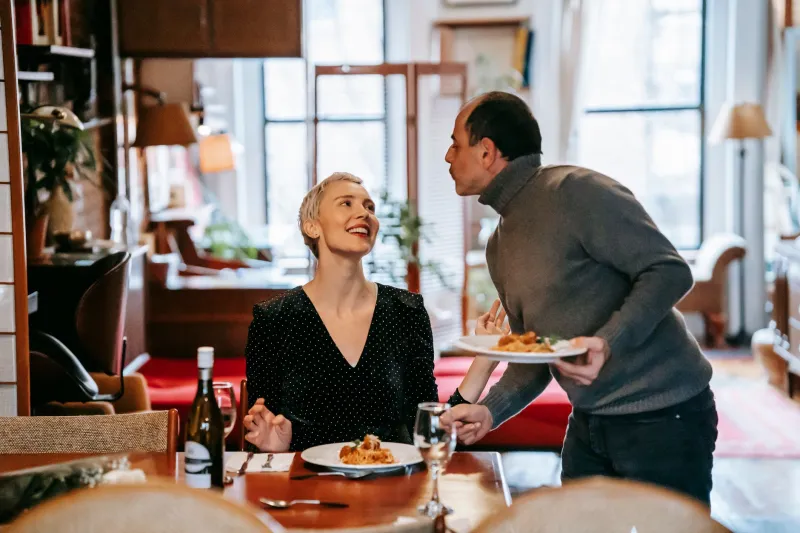
There is a particular kind of evening that stays with a person for years. Not the one where every course arrived on time, every wine was correctly paired, and every conversational topic was navigated with impeccable tact. Rather, it is the evening where something unexpected happened — a remark landed with perfect comic timing, an observation about the absurdity of the room prompted a shared glance, and suddenly the careful architecture of the occasion gave way to something far more human. That is the evening one remembers.
In London's more rarefied social circles, laughter is sometimes treated with a degree of suspicion — as though genuine mirth were somehow at odds with good taste. This is, of course, a misunderstanding of what sophistication actually means. The most accomplished hosts, the most celebrated conversationalists, and the most sought-after companions have always understood that wit and warmth are not concessions to informality. They are, in fact, among its highest expressions.
The Paradox at the Heart of Refinement
There is a paradox that governs the most distinguished social occasions: the people who appear most at ease are rarely the ones who have worked hardest to appear so. True poise does not announce itself. It simply exists — in the unhurried gesture, the well-placed pause, the willingness to find something genuinely amusing and allow oneself to be seen doing so.
Forced sophistication, by contrast, is exhausting to witness. The companion who maintains an unbroken veneer of composed elegance throughout an entire evening may be technically faultless, yet somehow leave the gentleman feeling curiously alone. Perfection, when relentless, creates distance. It signals that the performance matters more than the person sitting across the table.
Authentic laughter dissolves that distance entirely. It is, in its way, an act of trust — a willingness to be genuinely present rather than perpetually managed. When a companion laughs with real feeling, she is not abandoning her refinement. She is demonstrating its most mature form.
Wit as Intelligence in Motion
The capacity for genuine humour is not separate from intelligence — it is one of its most elegant manifestations. To be funny in the right way, in the right moment, requires an acute reading of context, an understanding of one's companion, and a facility with language that no amount of social coaching can manufacture. It must be earned, and it must be real.
The distinction between wit and mere jokiness is worth dwelling on. Wit is precise. It finds the exact word, the perfectly calibrated observation, the angle on a situation that illuminates something true about it. Jokiness, by contrast, is indiscriminate — it reaches for laughs regardless of whether the moment calls for them. One signals intelligence; the other signals anxiety.
At Belgravia Orchids, the companions who are most consistently described as unforgettable are those who move fluidly between registers — who can hold a serious conversation with genuine depth and then, when the occasion permits, allow a thread of dry wit to run through it. This is not a performance. It is the natural expression of a mind that is genuinely engaged.
Reading the Room, Then Gently Rewriting It
Not every evening calls for laughter, and the companion who attempts to inject levity into every silence misunderstands the assignment entirely. The art lies in reading the emotional weather of the room with accuracy — sensing when a gentleman needs to decompress after a punishing week in the City, when he is in the mood for something intellectually stimulating, and when, beneath the weight of all that seriousness, he is quietly longing for someone to say something that makes him laugh until his shoulders drop.
That last capacity — the ability to offer genuine comic relief without undermining the dignity of the occasion — is among the rarest social gifts. It requires not only a sense of humour but a sensitivity to timing that borders on musical. Too early, and the joke falls flat against the formality. Too late, and the moment has passed. Precisely right, and the entire evening shifts into a warmer, more intimate key.
The finest restaurants in Belgravia and Mayfair have always known this. The best sommeliers, the most celebrated maîtres d'hôtel — they understand that a perfectly timed moment of warmth, even a brief exchange of dry amusement, can elevate a meal from excellent to genuinely memorable. Companions of distinction operate by the same principle.
The Memory That Outlasts the Occasion
Consider what actually endures from an exceptional evening. The menu, however brilliant, fades. The name of the wine, however distinguished, blurs. Even the precise details of the conversation become indistinct over time. What remains, with remarkable persistence, is feeling — the particular quality of ease that characterised the hours, the sense that one was genuinely known and genuinely enjoyed rather than merely entertained.
Shared laughter contributes to that feeling in a way that is difficult to overstate. Neurologically, physiologically, and socially, it is among the most powerful bonding mechanisms available to human beings. It signals safety, mutual regard, and — crucially — the absence of performance. You cannot fake the kind of laughter that makes an evening unforgettable. You can only create the conditions in which it might naturally arise.
This is why the companion who arrives with nothing but polished conversation and immaculate presentation, however admirable, may ultimately leave less of an impression than the one who also arrives with a genuine sense of the absurd — who can find the comedy in the overheard exchange at the next table, who can respond to an unexpected situation with lightness rather than alarm, and who understands that sometimes the most sophisticated thing one can do is simply allow something to be funny.
Warmth as the Quietest Form of Luxury
In a world that frequently mistakes austerity for quality, there is something quietly radical about insisting that warmth — genuine, unguarded warmth, expressed through shared joy — belongs at the very highest level of companionship. It does. It always has.
The orchid, for all its associations with rarity and restraint, is not a cold flower. It is, in the right conditions, extraordinarily responsive — to light, to temperature, to the particular environment in which it finds itself. The finest companions share something of this quality: a capacity to open fully when the conditions are right, to offer something that no amount of careful cultivation alone can produce.
Laughter is one of those things. It cannot be scheduled, rehearsed, or guaranteed. But it can be made possible — by a companion who is genuinely present, genuinely curious, and genuinely delighted by the human comedy of the world around her. When it arrives, it transforms an evening from an occasion into a memory. And that, in the end, is what the most discerning gentlemen are truly seeking.